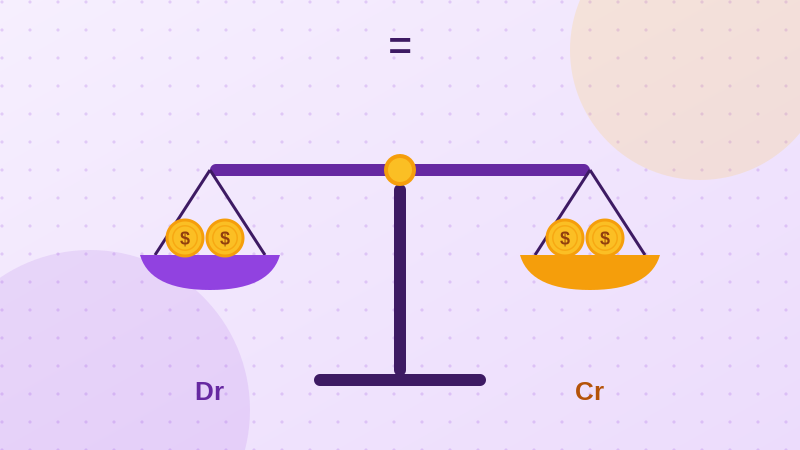
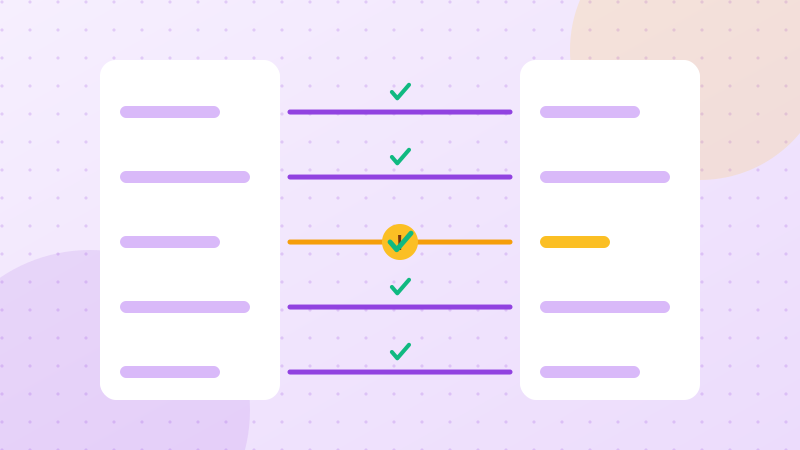
Reconciling means comparing two independent sources for the same thing. Your books say there are 500,000 afghani in the bank; the bank statement should say the same.
Why differences appear
- A cheque you wrote that has not cleared yet.
- Money the bank took (fees) that you did not record.
- A deposit the bank recorded that is not in your books.
- A mistake in writing an amount.
The steps
- Get the bank statement balance at month end.
- Match each line of your books against a line on the statement.
- Note the lines that appear on only one side and find out why.
- Add forgotten entries, such as bank fees, to your books.
The same goes for cash
At the end of each day count the till and compare it with the books. Find today's small gap today, not at month end.
What reconciliation proves
Reconciliation is the act of comparing two independent records of the same money and explaining every difference between them. For a bank account, the two records are your books and the bank’s statement. For cash, they are your books and the physical count. When the two agree, or when the difference is fully explained, you know the balance in your accounts is real. When they do not, you have found either a mistake, a missing entry or something worse, and finding it early is far cheaper than finding it late.
Because the bank and the cash drawer hold the most liquid and most tempting assets of the business, reconciliation is also one of the strongest controls against error and fraud. A person who knows that every month someone else will compare the books to the bank has much less reason to try anything.
The four kinds of difference
Almost every difference between a bank statement and the books falls into one of four groups. Learn them and the work becomes mechanical.
- Timing differences: cheques you issued that the bank has not yet paid, and deposits you made that the bank shows only on the next day. These are not errors. They clear on their own.
- Items the bank has and you do not: bank charges, interest, a customer’s direct transfer you did not know about, a standing order. You must enter them in your books.
- Items you have and the bank does not, and should: a deposit recorded but never made, or a cheque recorded as paid that was never issued. These need investigation.
- Errors: a wrong amount, a transposed number, an entry on the wrong date or in the wrong account. They may be yours or the bank’s.
The reconciliation in steps
- Get the statement for the period and the bank ledger from your books for the same dates. Check that the opening balances agree with the closing balances of the previous reconciliation.
- Tick off every item that appears on both. Use a pencil or the matching tool in the system.
- List what is left in the bank statement, unticked. These are items you have not yet recorded. Enter them in your books.
- List what is left in your books, unticked. These are outstanding: cheques not yet presented and deposits in transit. Write them in the reconciliation with their dates.
- Calculate the adjusted balance: the statement balance, plus deposits in transit, minus outstanding cheques. It must equal the book balance after your new entries.
- If it does not, look for errors: transposed digits, a duplicate entry, or an item ticked against the wrong amount.
- Sign and date the reconciliation, and file it with the statement.
A worked example
On the last day of the month your bank ledger shows 480,000 AFN. The bank statement shows 475,500 AFN. All numbers are made up. You go through the items:
- A cheque for 25,000 AFN to a supplier was issued on the 29th and has not yet been paid by the bank: outstanding cheque.
- A deposit of 40,000 AFN made on the 30th appears on the statement on the 2nd: deposit in transit.
- The bank charged 1,500 AFN in fees which you have not recorded.
- A customer transferred 12,000 AFN directly to the account; you had no notice.
Start with the books: 480,000 − 1,500 fees + 12,000 transfer = 490,500 AFN. Now the statement: 475,500 + 40,000 deposit in transit − 25,000 outstanding cheque = 490,500 AFN. The two agree, so the reconciliation is complete. Two entries had to be made in the books (the fee and the transfer) and two items are simply waiting for the bank (the cheque and the deposit). Had the figures differed by even 1,500 AFN, the next step would be to hunt for a transposed number or a duplicate entry before signing anything.
The method, not the numbers, is the lesson: every difference must be named, tied to a document, and either cleared or corrected. “Unexplained” is not an acceptable line in a reconciliation.
Reconciling cash in the drawer
Cash needs a different approach because there is no outside statement. The “statement” is a physical count, and the person who counts should not be the person who keeps the cash. Count by denomination, write the result down, sign it and compare it with the book balance of the cash account at the same time. If the counted cash is less than the books, record the shortage in a cash difference account, with the reason when known. If it is more, record the surplus the same way. Do not push the difference into sales or expenses to make the numbers match.
- Count at the same time every day if possible, at the end of trading.
- Count again if the difference is more than a very small amount.
- Keep a daily sheet: opening cash, receipts, payments, closing cash.
- Bank the cash regularly. A large cash balance in a drawer is a risk.
- Have the owner or a manager check the count at random.
Foreign-currency accounts
For a dollar account, reconcile the dollar balance to the dollar statement first. Only after the dollar amounts agree do you convert to afghani and re-value at the closing rate. A difference in the afghani value is an exchange difference, not a reconciliation error.
What to do with old unreconciled items
Cheques that stay outstanding for a long time, for example more than six months, may be stale, and the payee may have lost them. Contact the payee. If the cheque is no longer valid, cancel it in the books and return the amount to the supplier’s account. Deposits in transit that never reach the statement may mean the deposit was never made. Investigate them first.
How often?
Bank accounts should be reconciled at least monthly, and in an active business weekly. Cash should be reconciled daily. The more often you do it, the shorter the list of items to go through and the easier it is to remember what happened.
How NextBook helps
NextBook keeps a ledger for each bank and cash account and lets you mark entries as cleared against the statement. The reconciliation shows the statement balance, the cleared and uncleared items, and the difference that remains, so you can see at a glance when the work is finished. Bank charges, interest and direct transfers can be entered straight from the reconciliation screen.